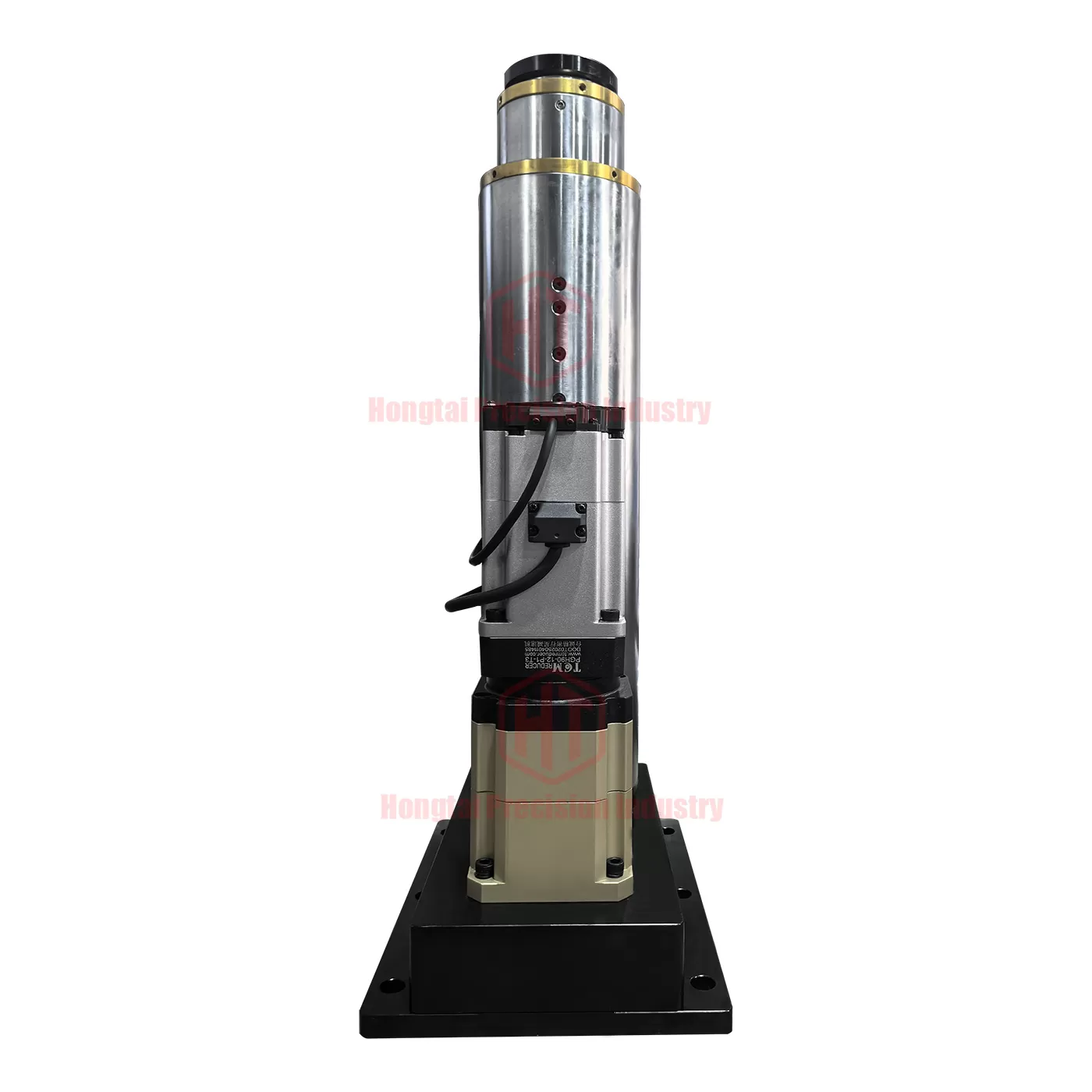
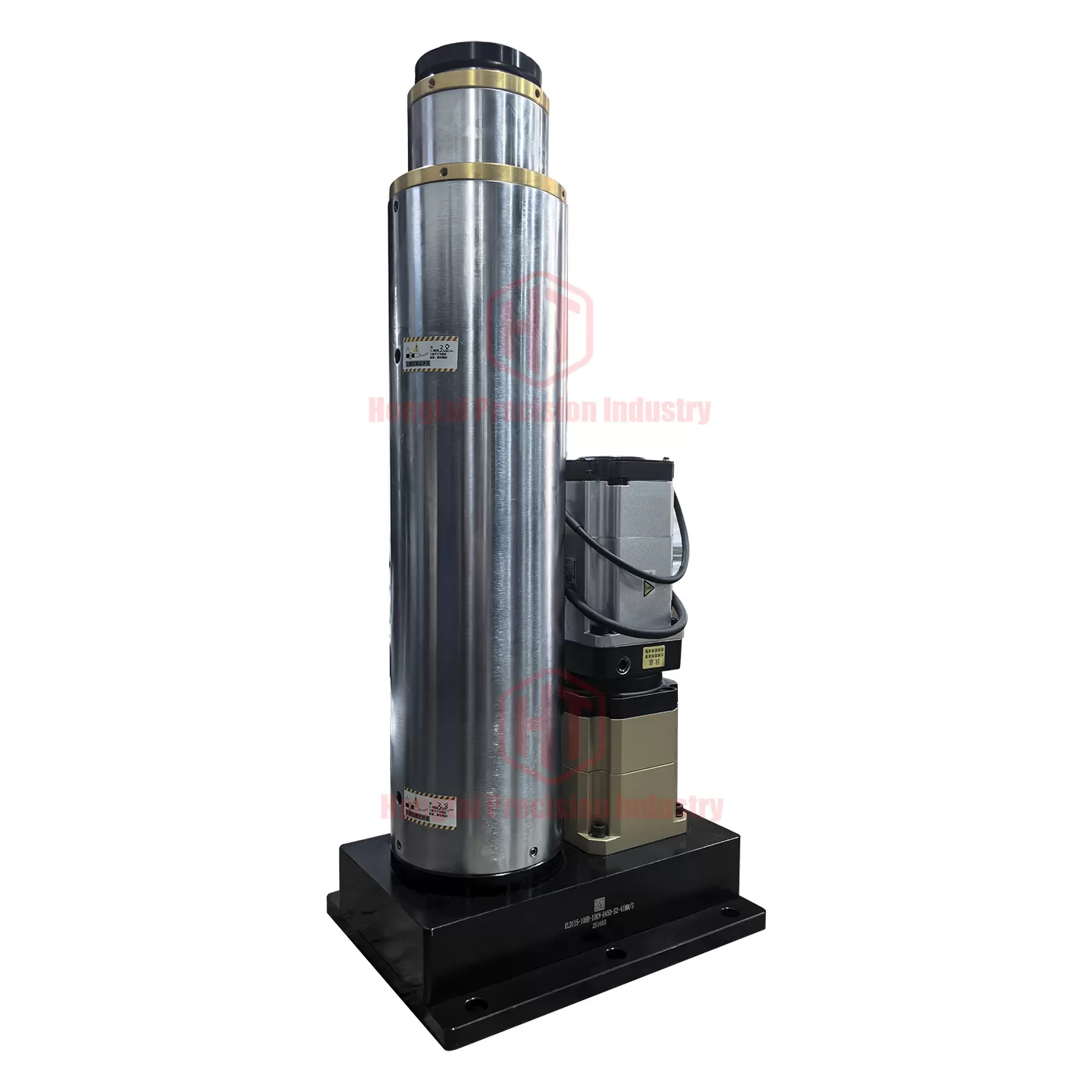
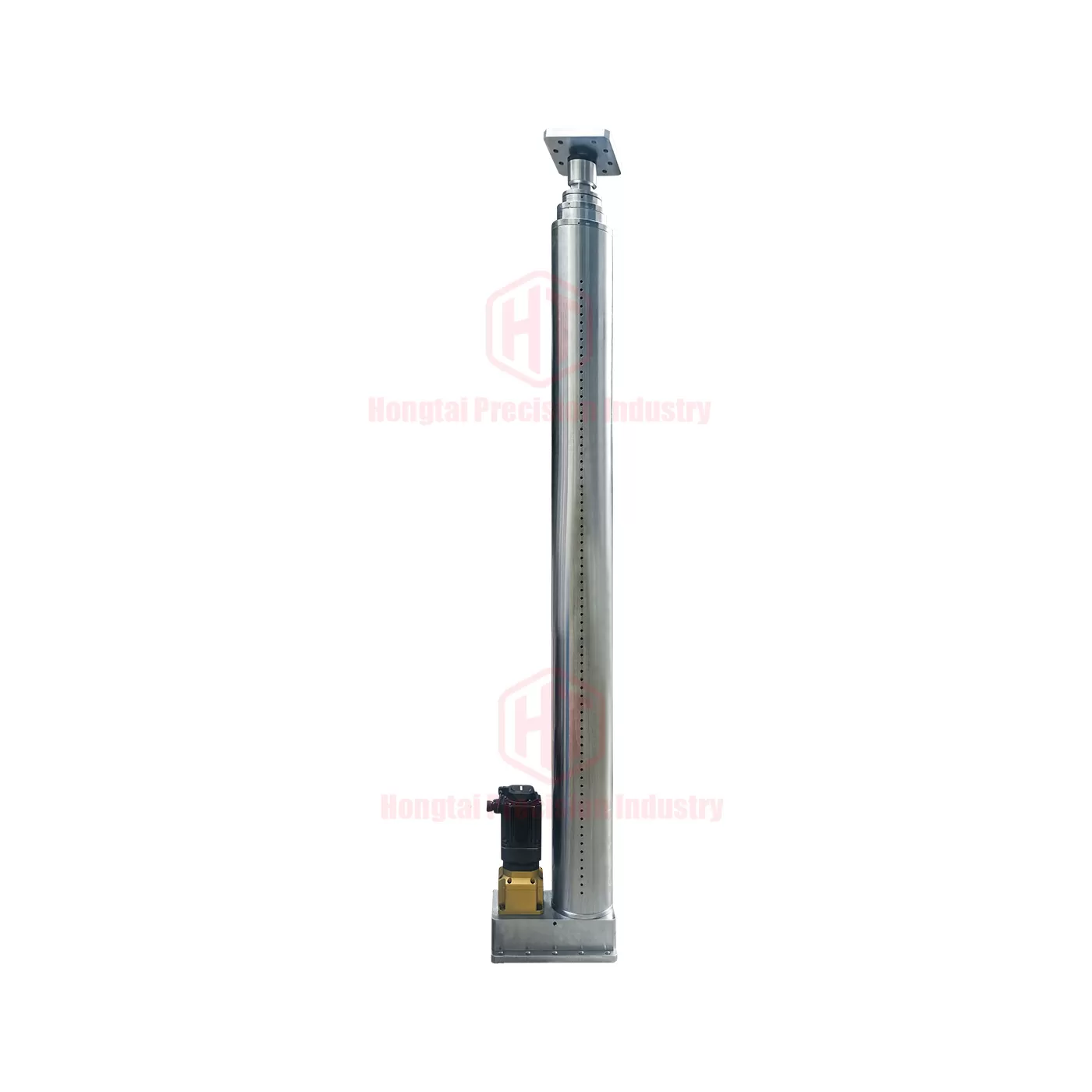
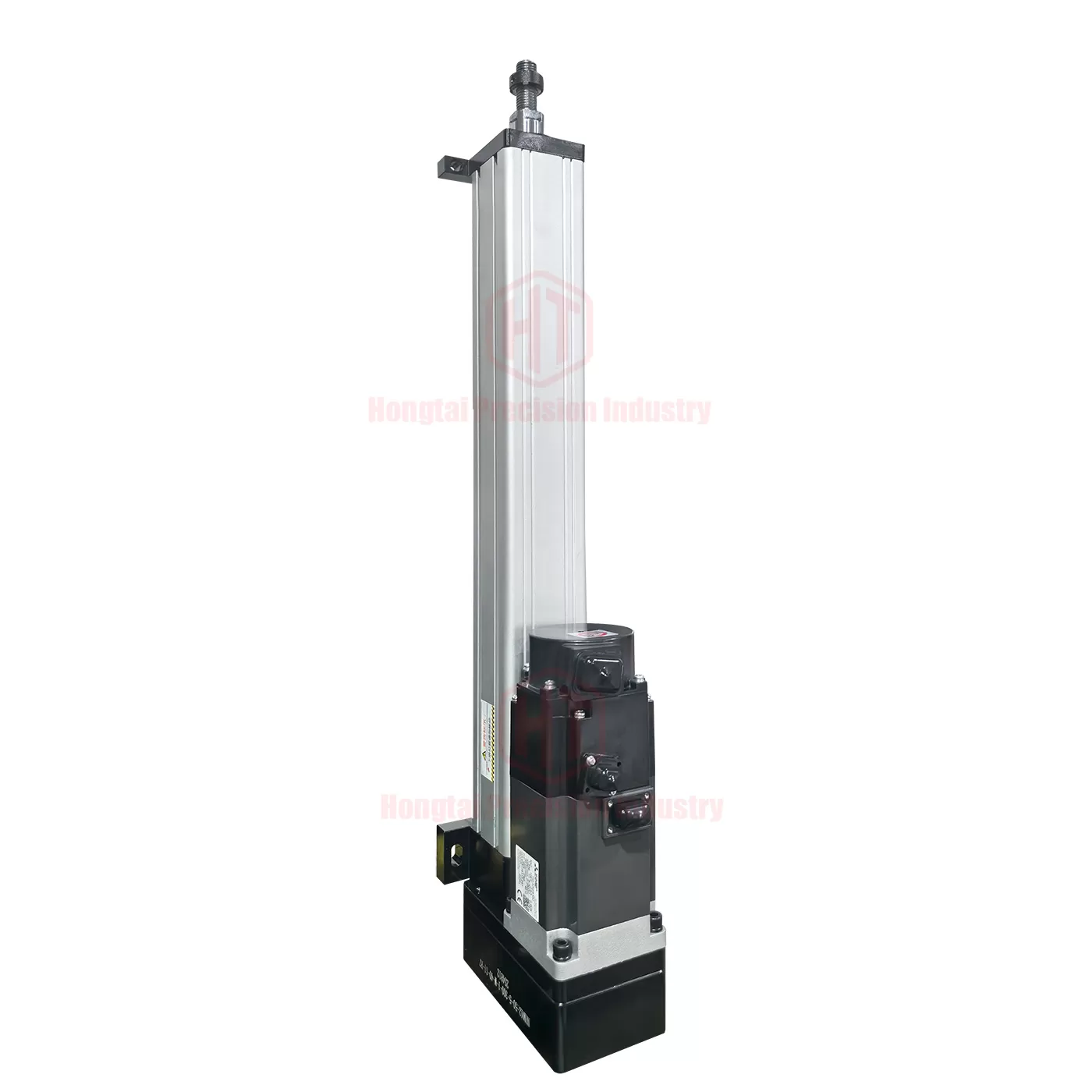
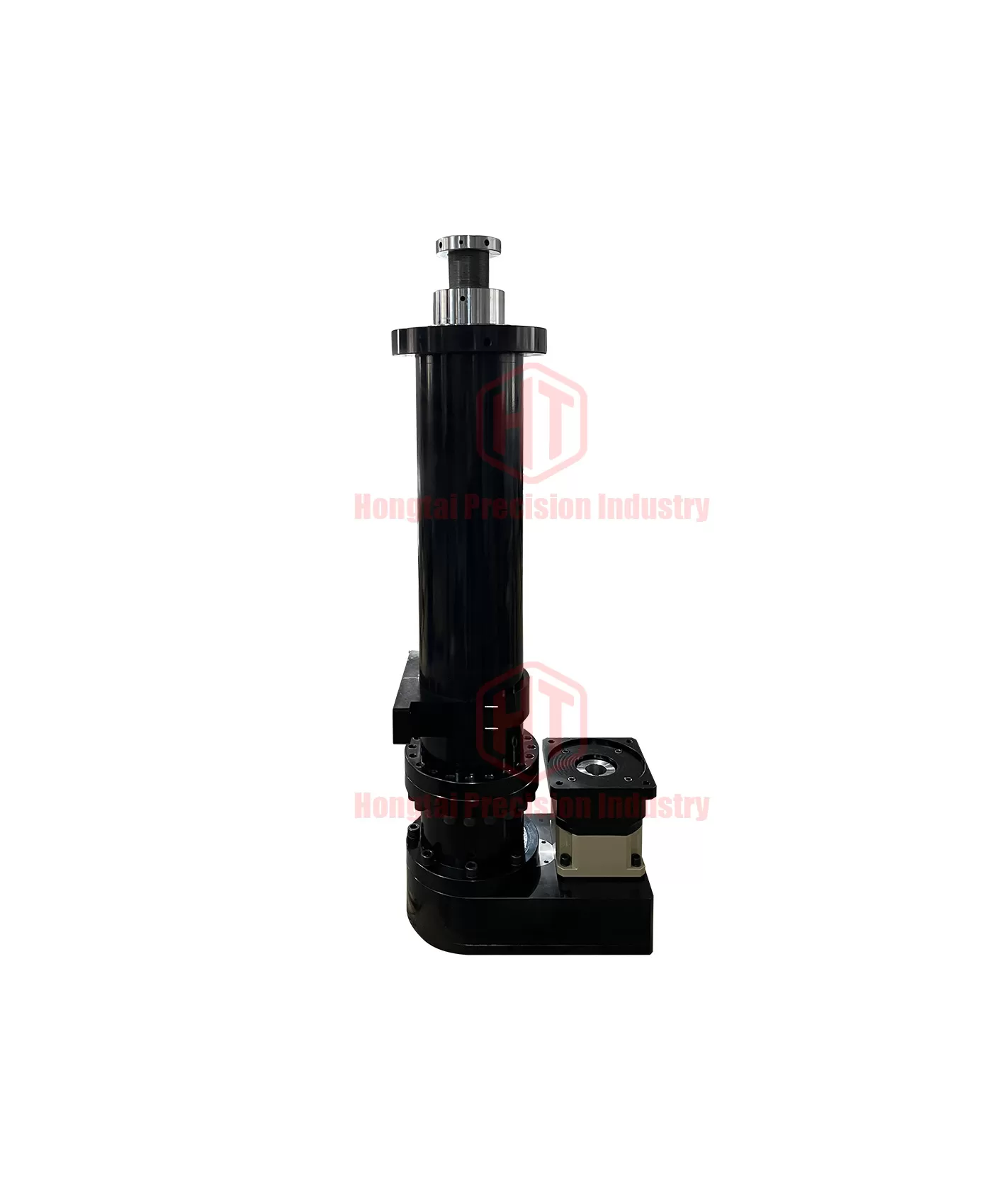
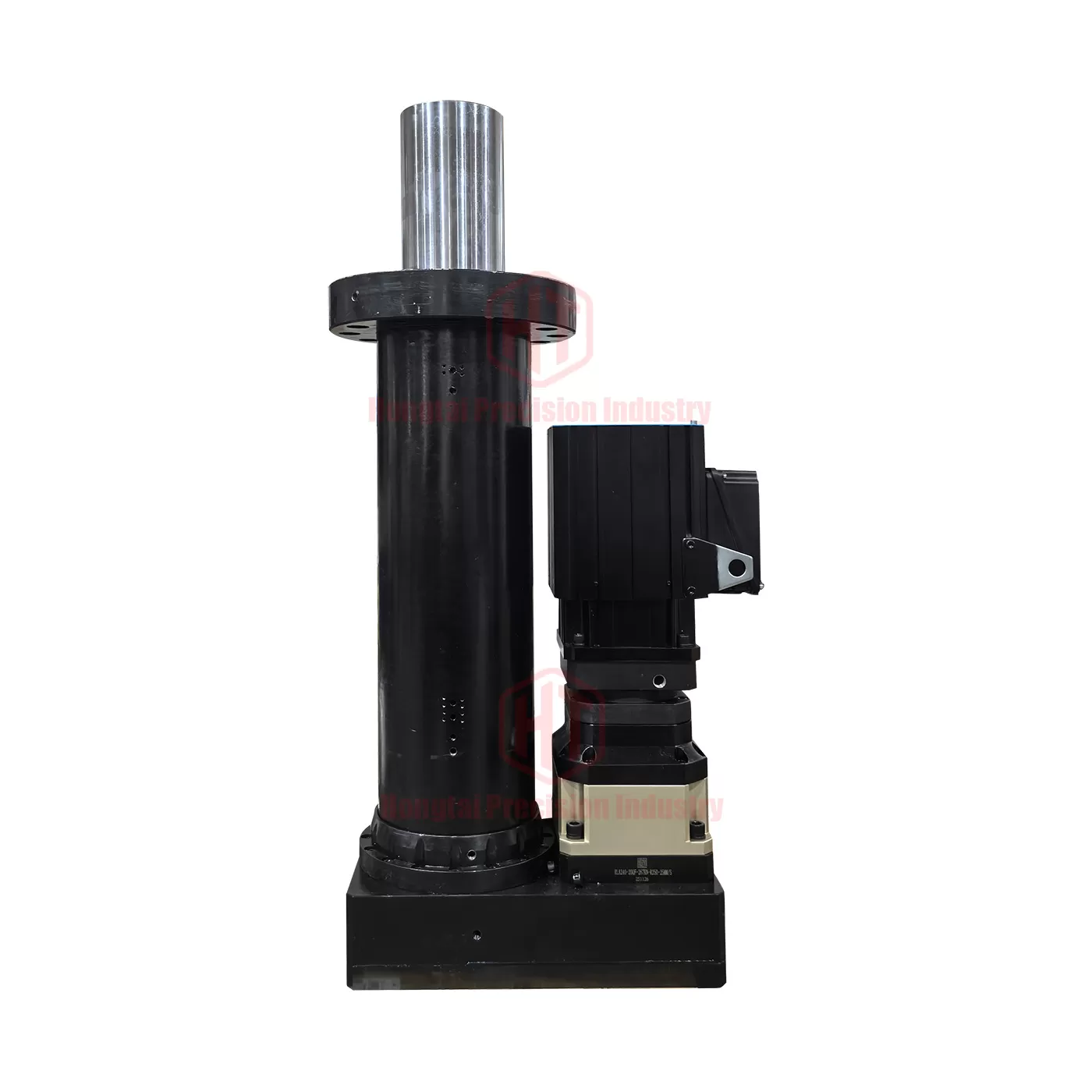
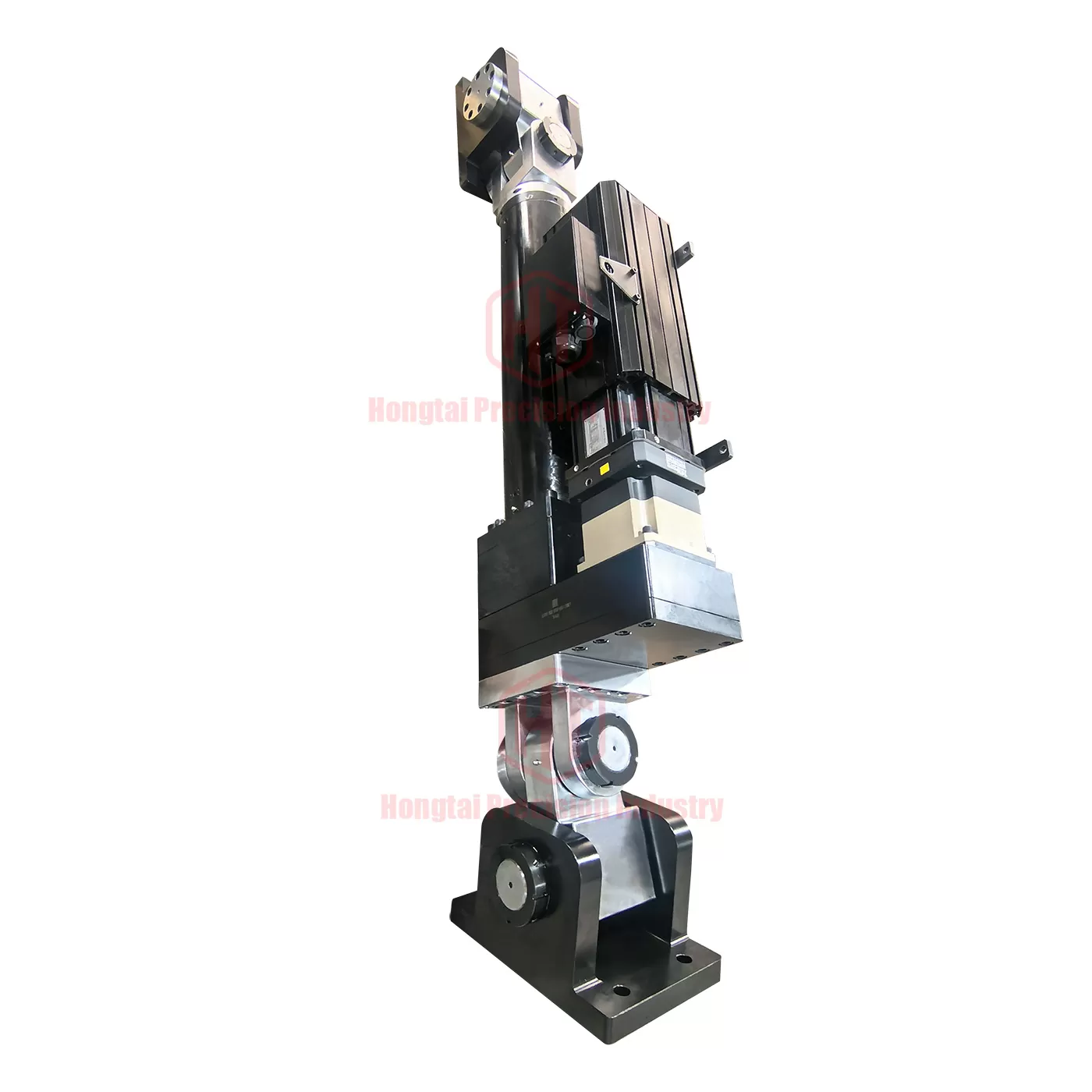
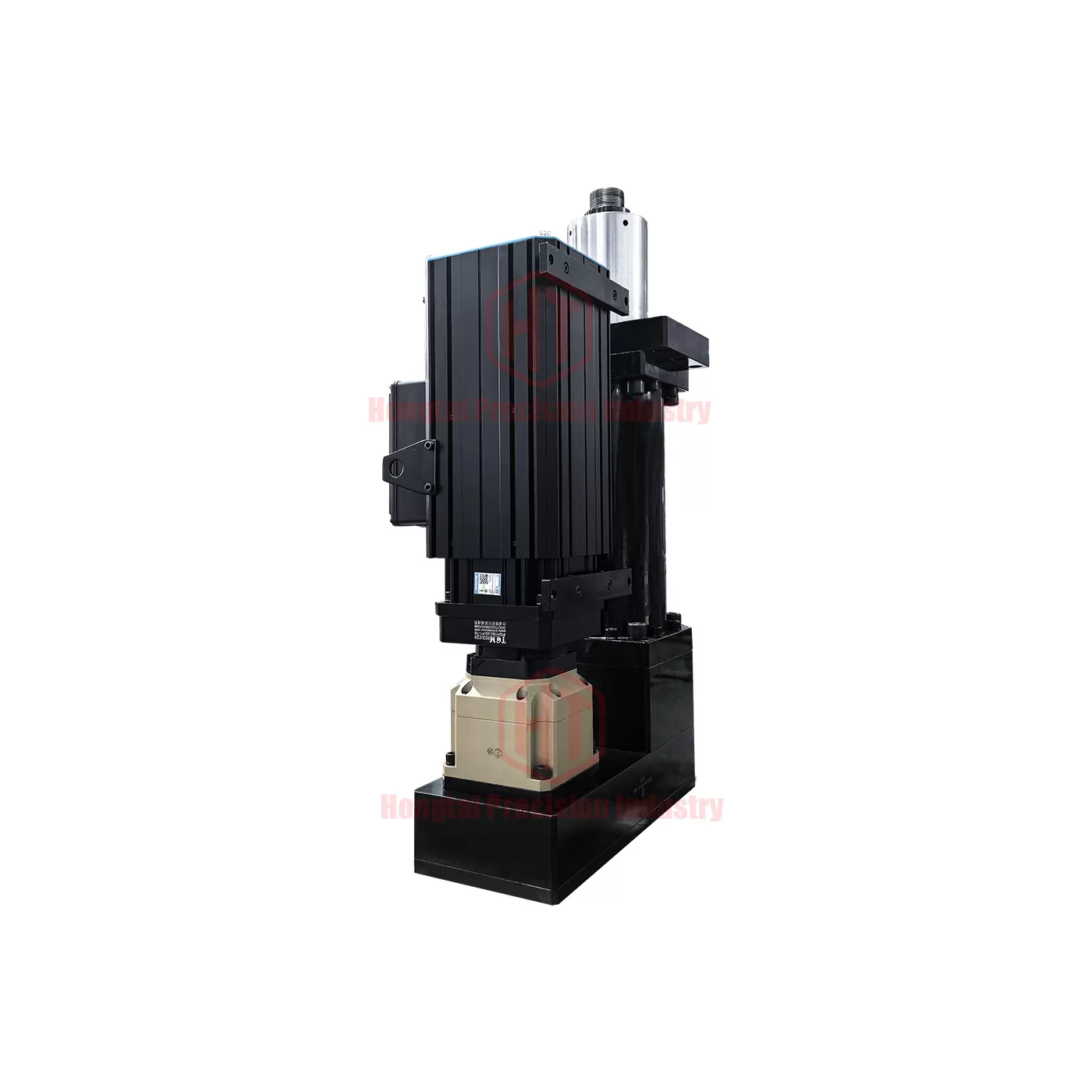
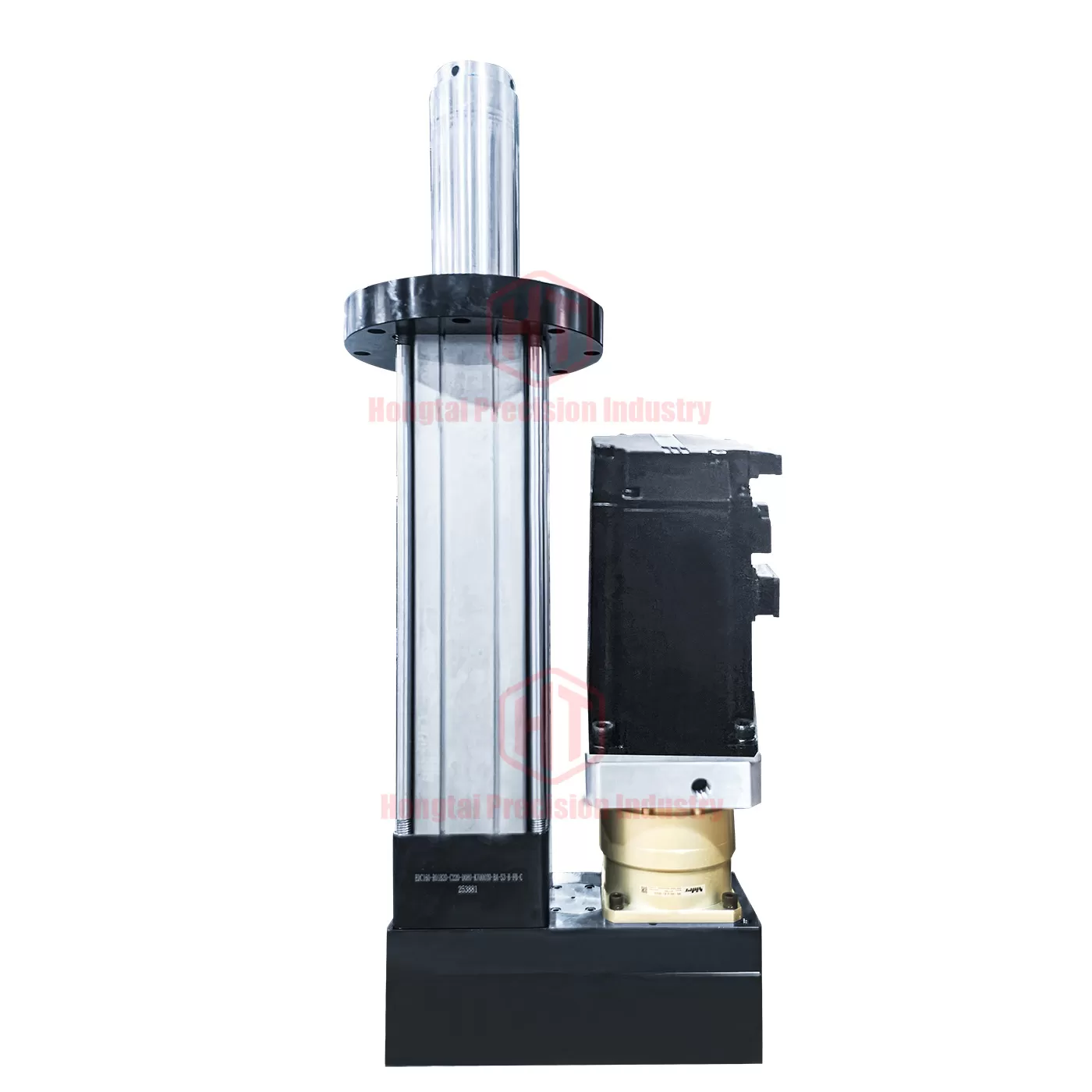
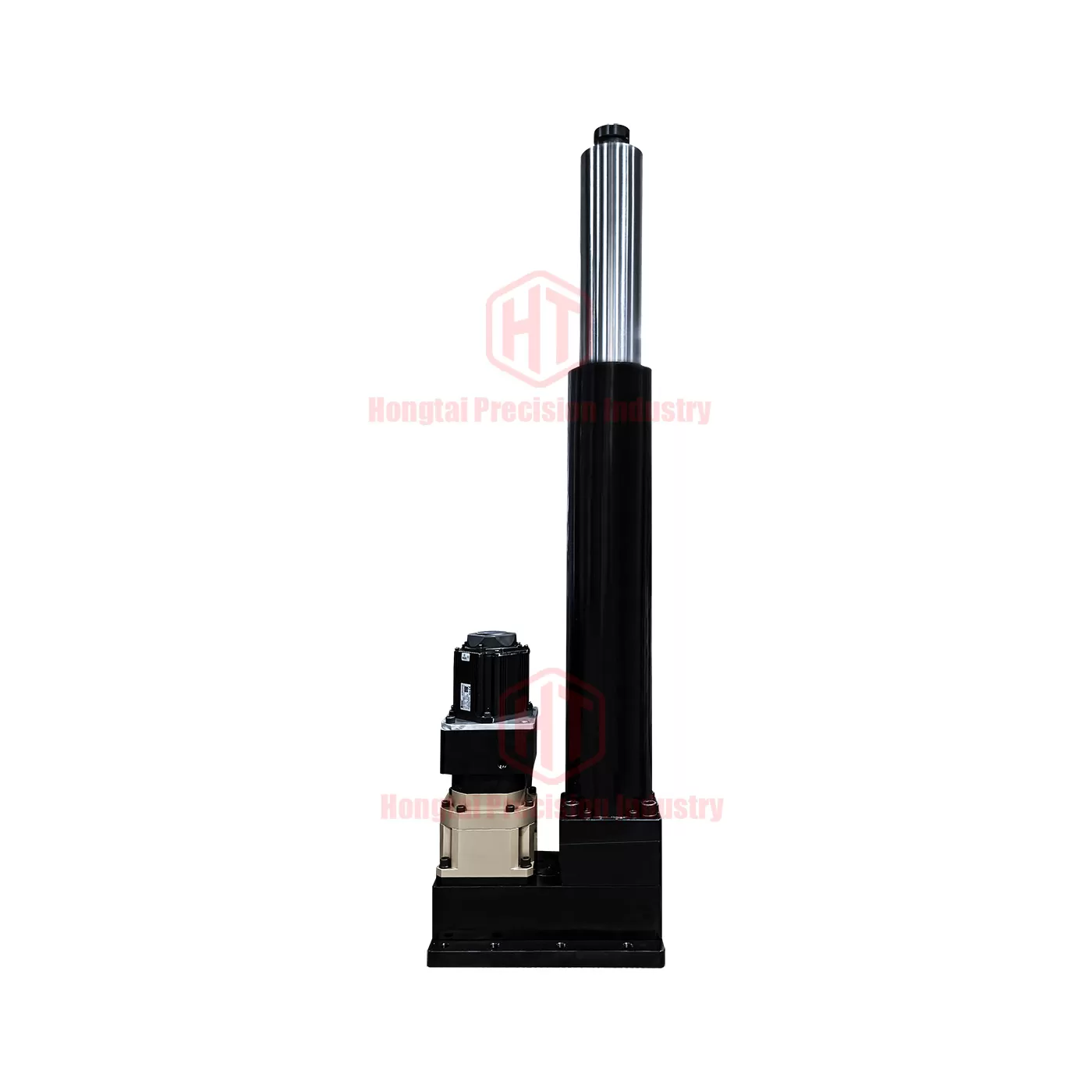
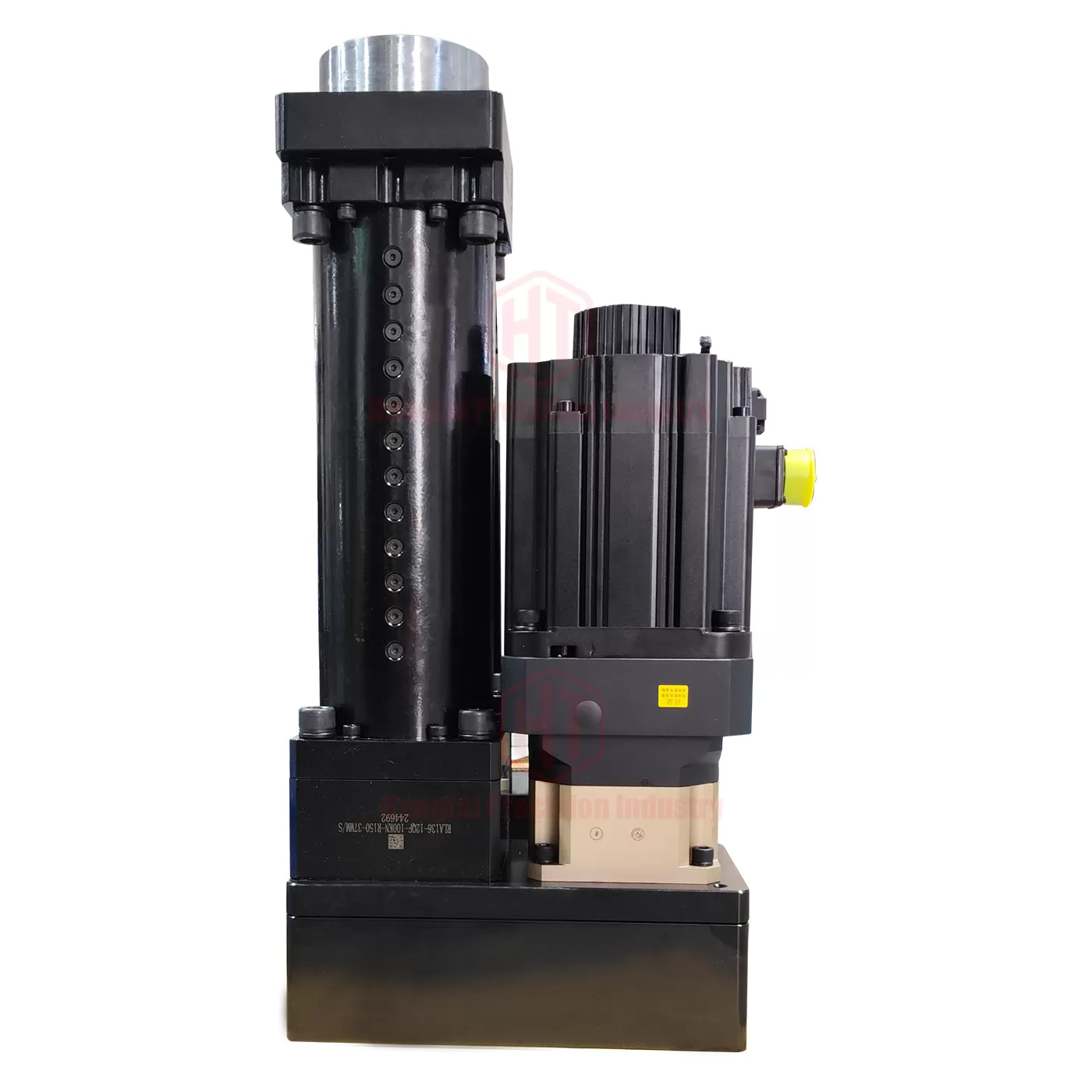
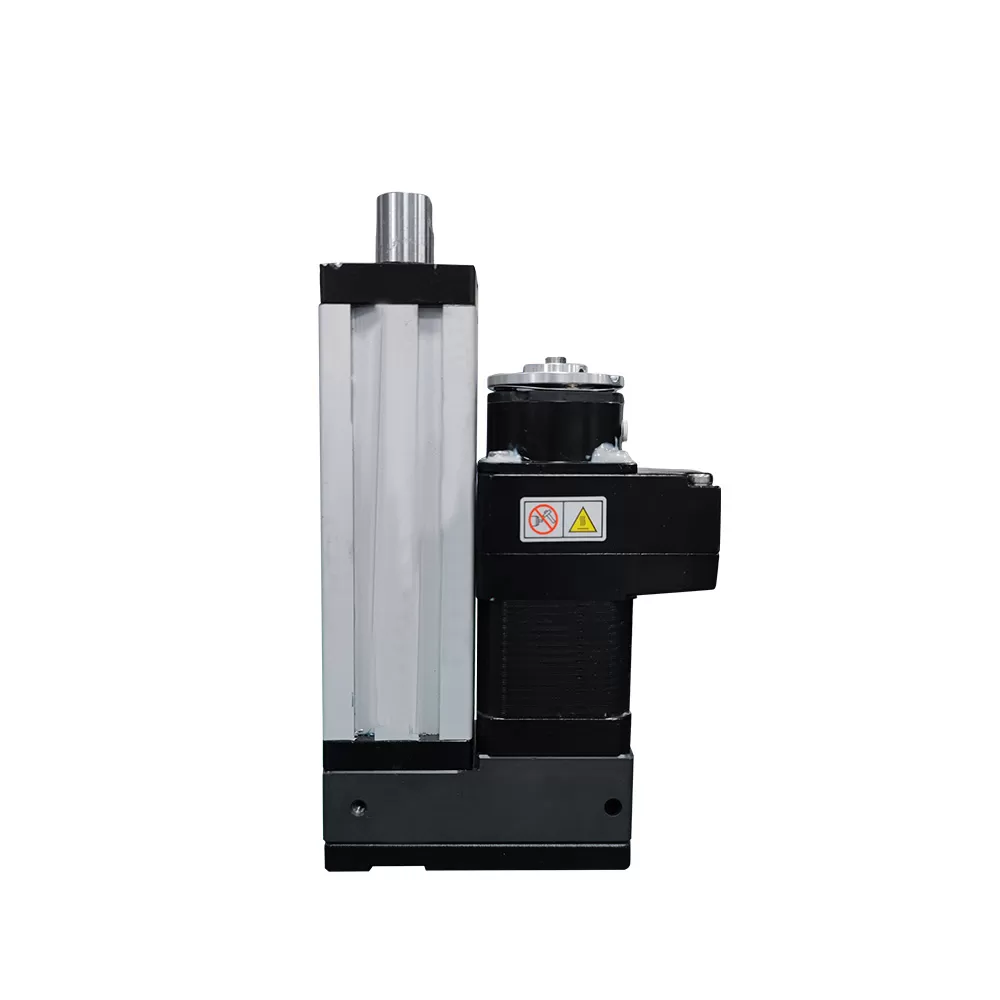
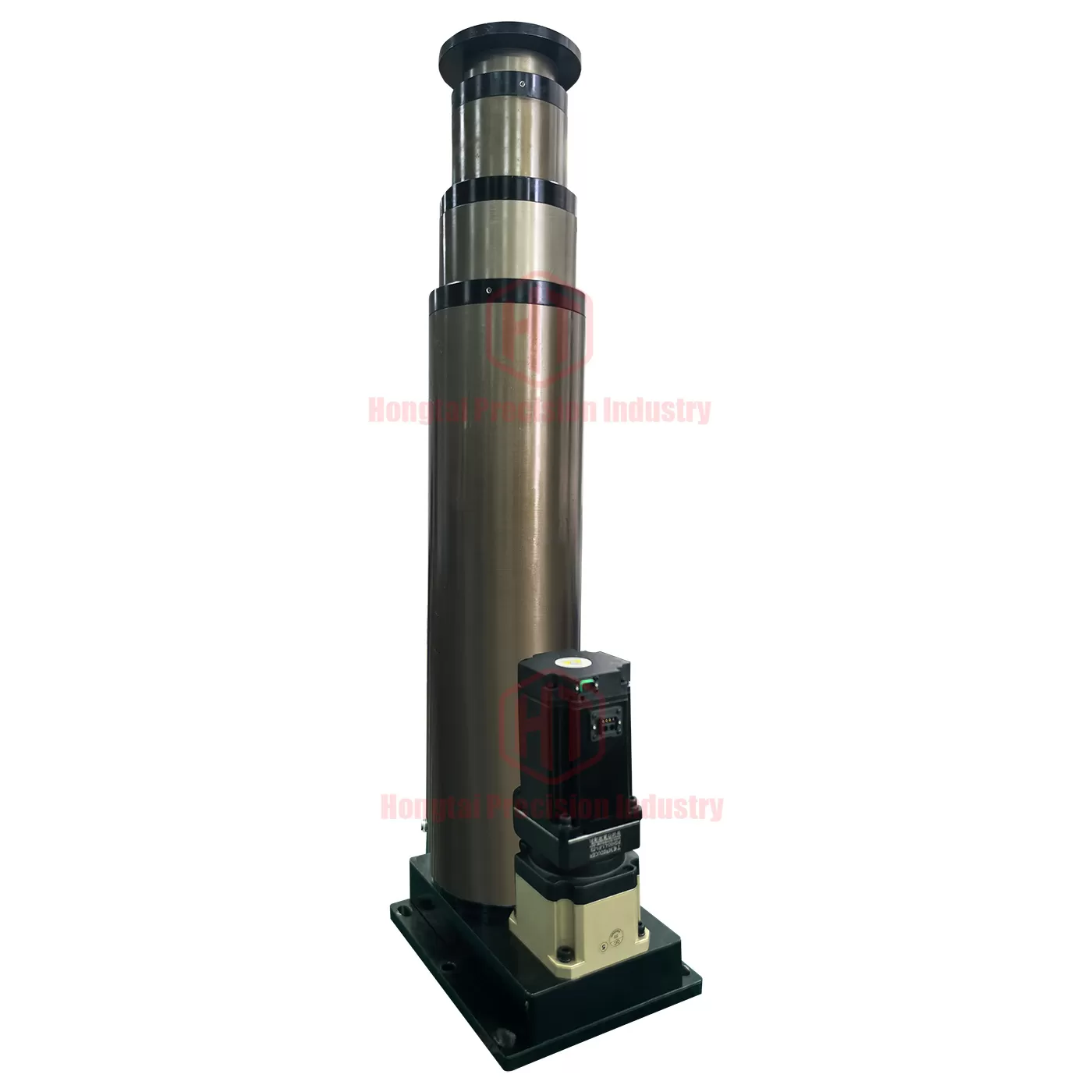
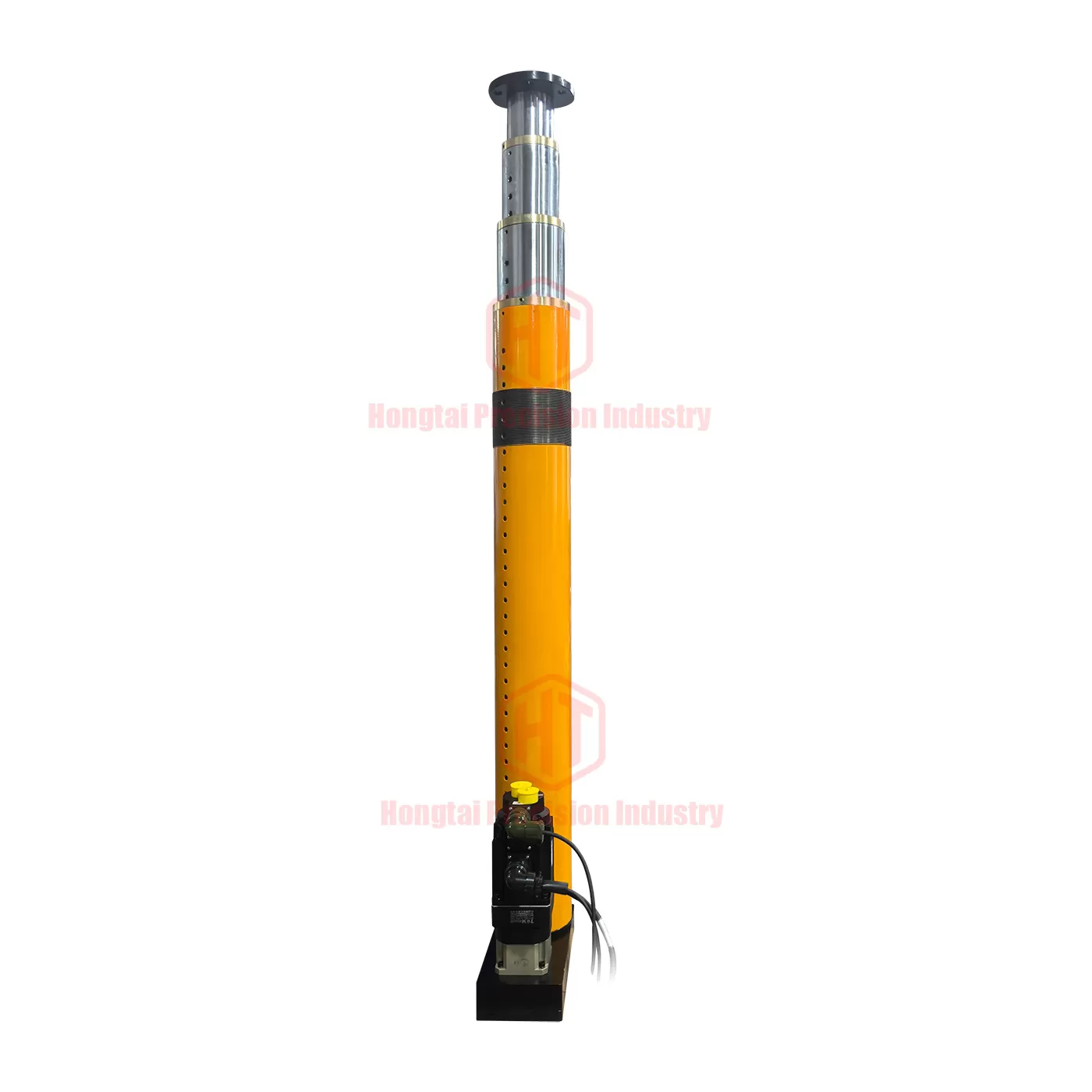
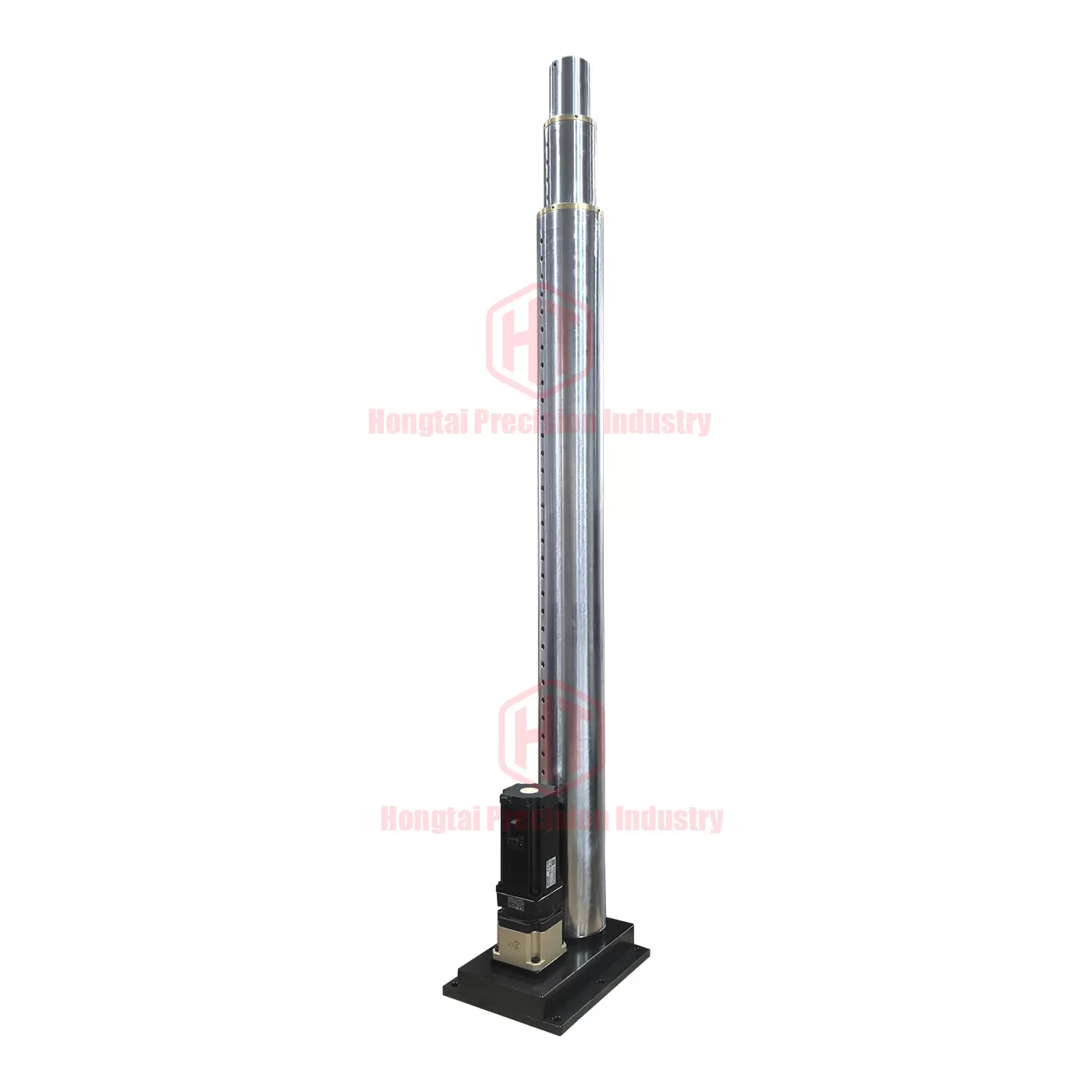
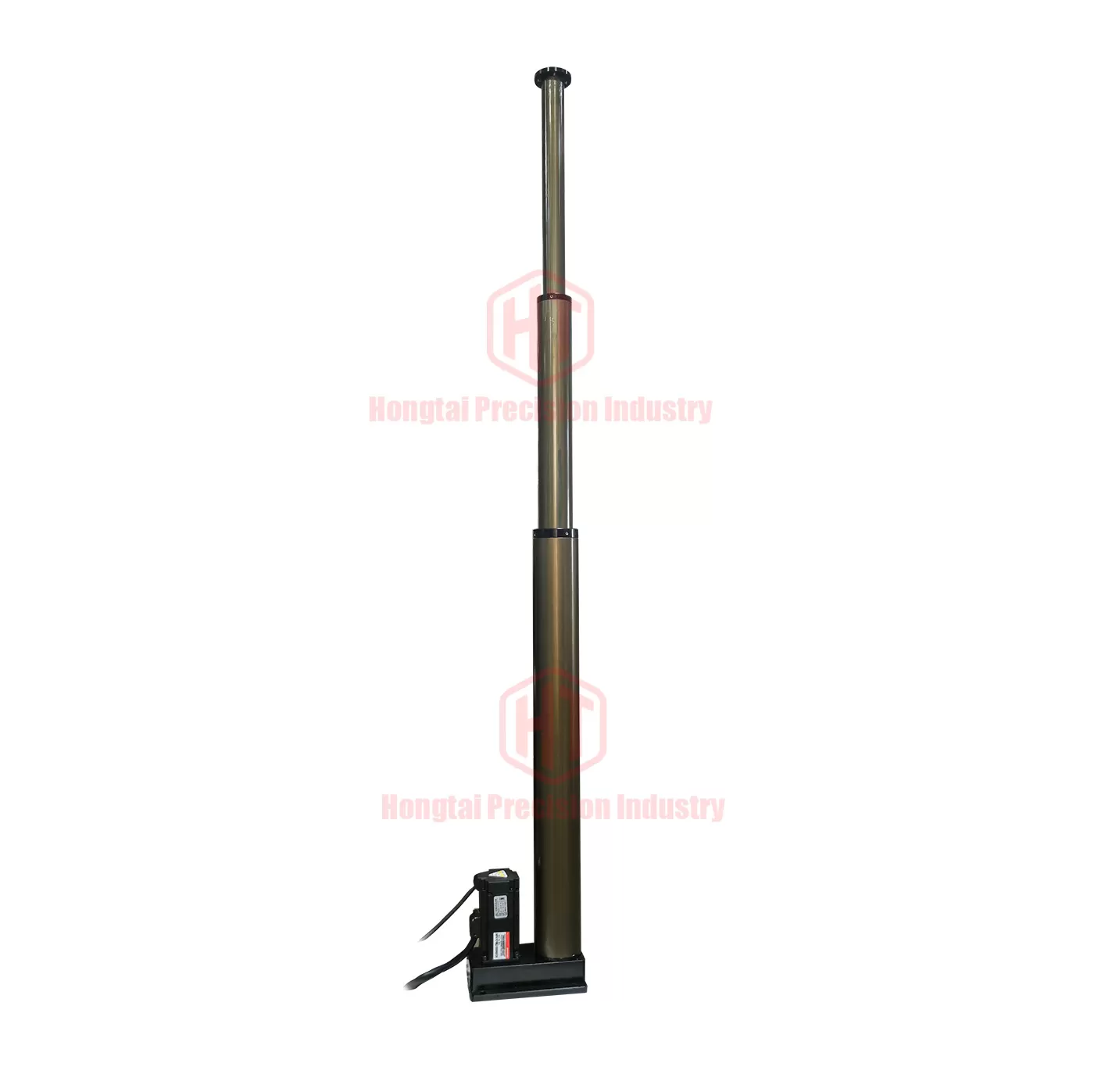
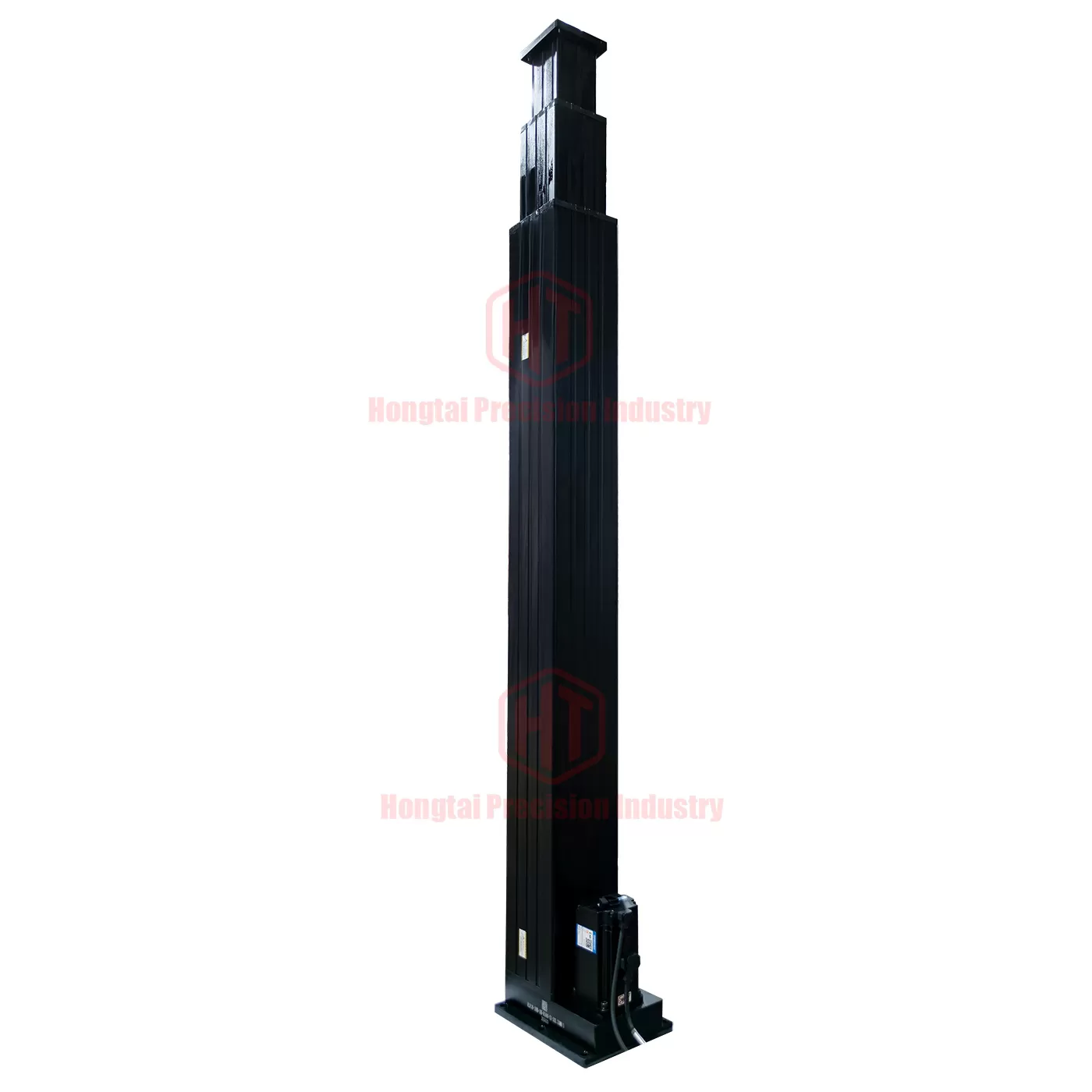
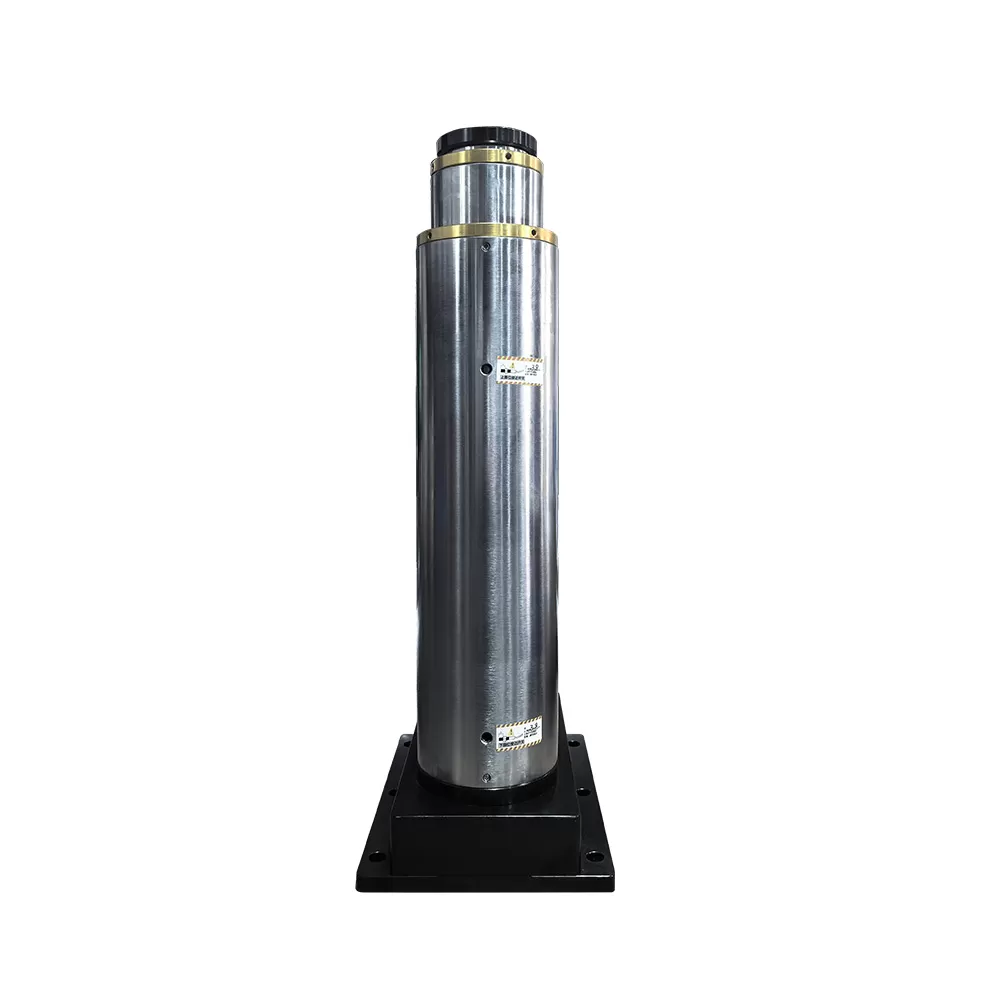
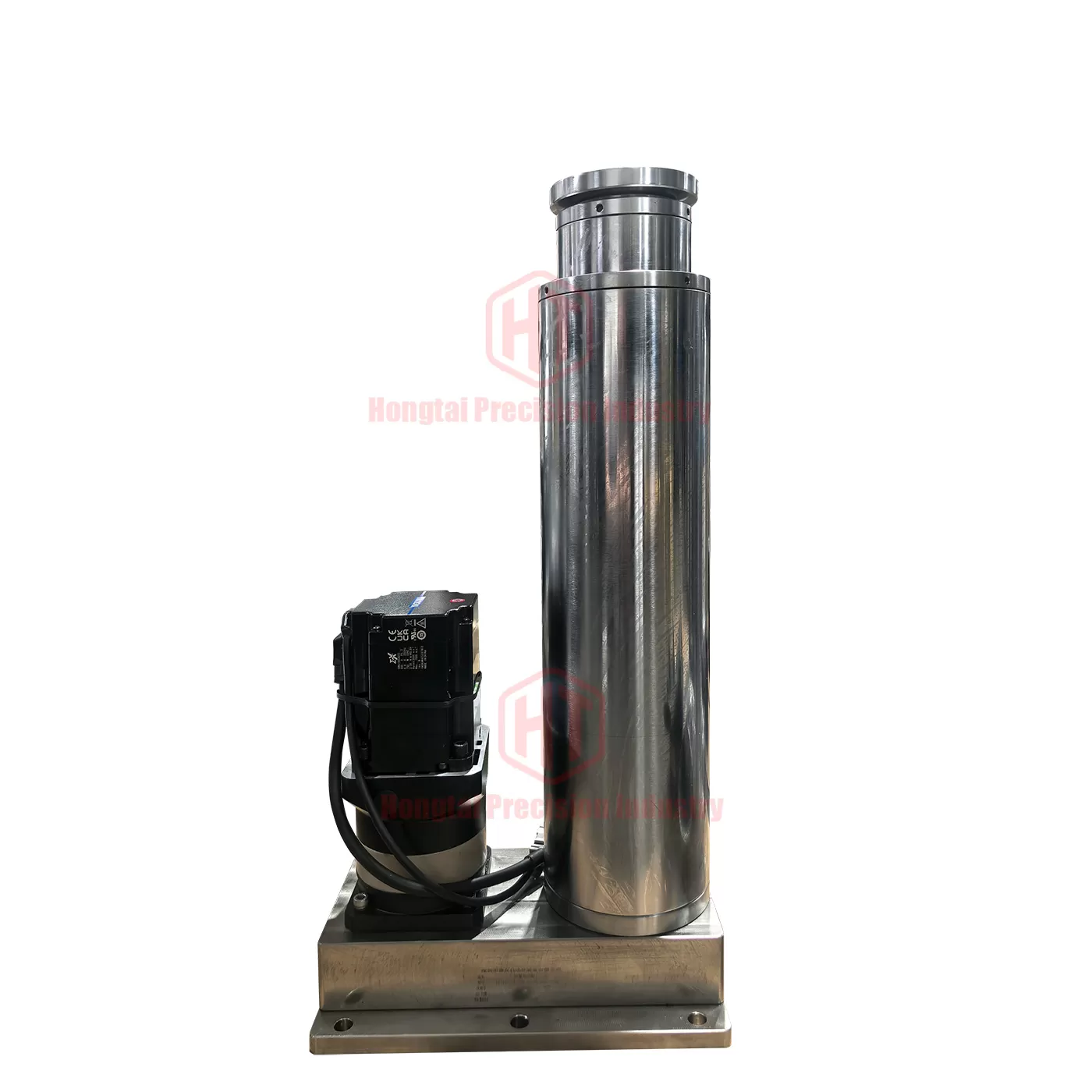
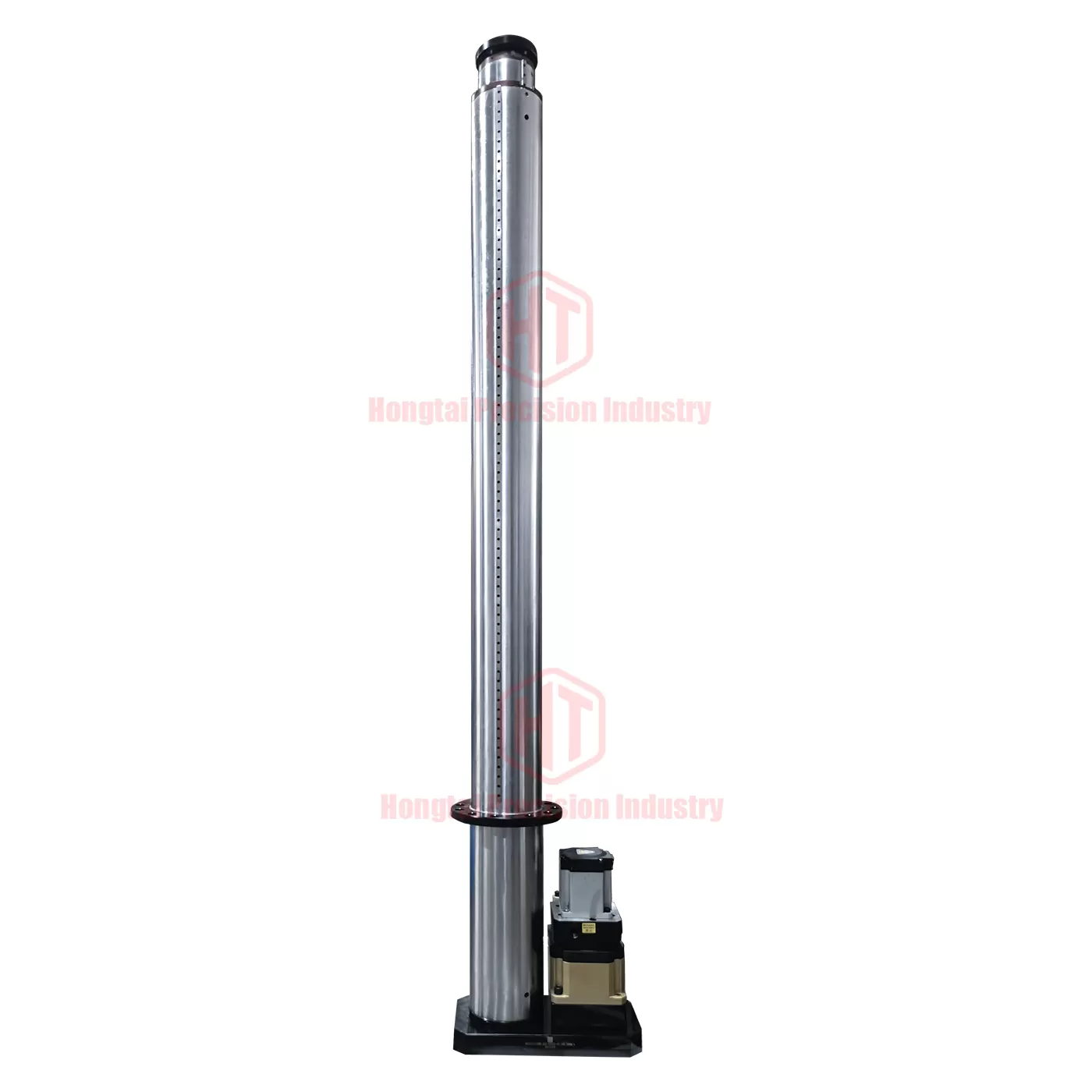
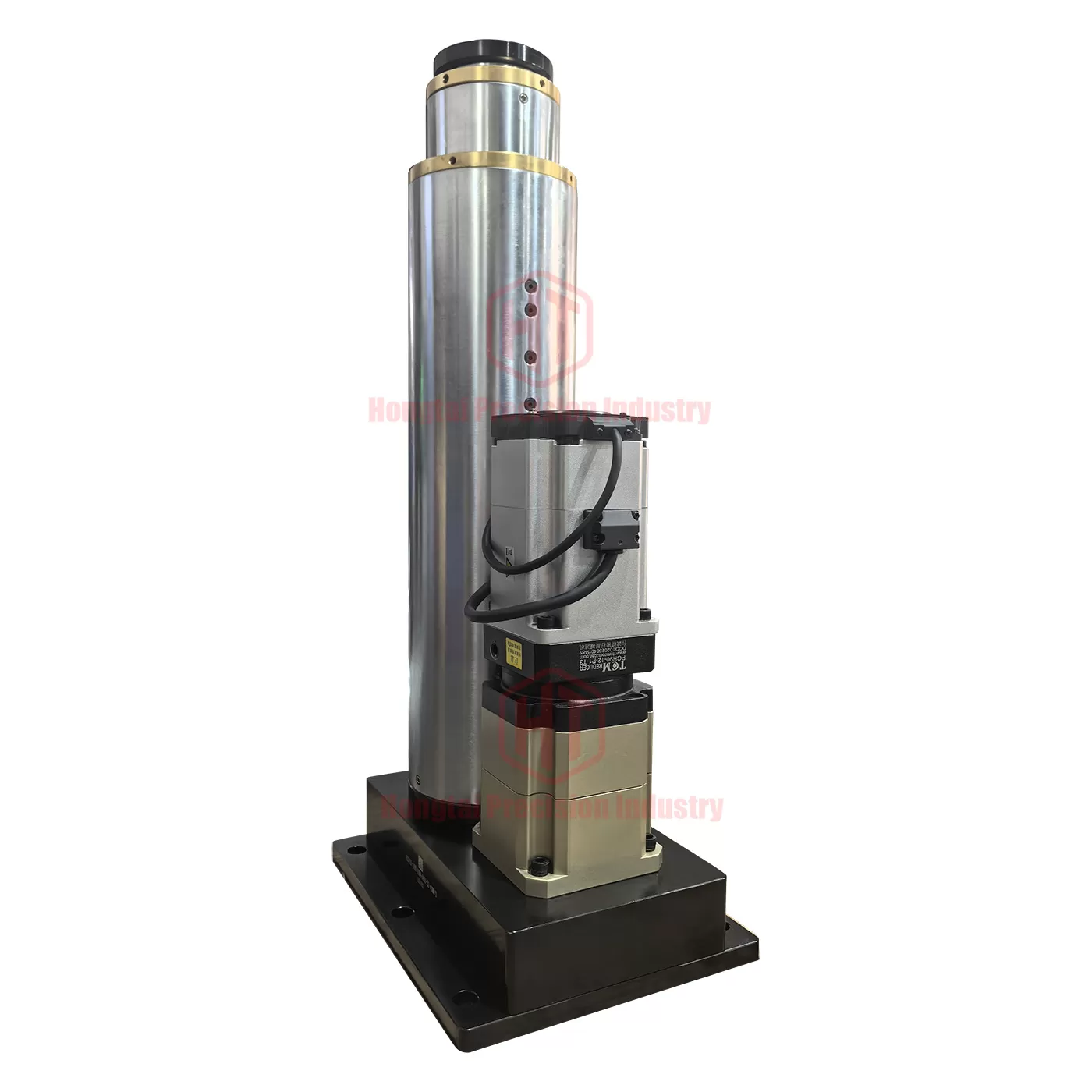
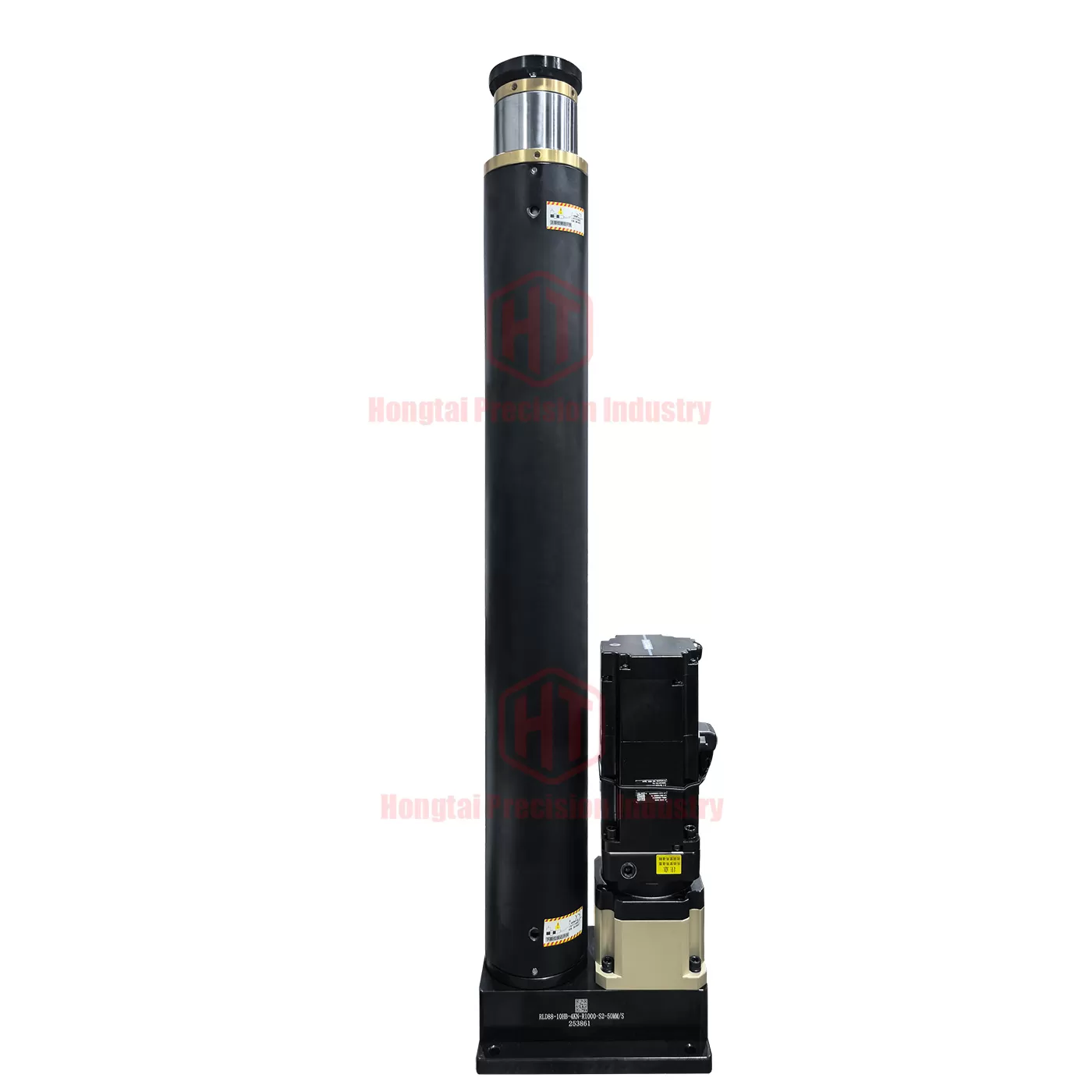
Widely used in many industries, especially for Z-axis lifting columns of manipulators.It can perform lifting and horizontal movement, with high precision, fast speed, large load capacity and long stroke.
Ruilian multi-stage telescopic working platform features long stroke, large tonnage and high repeat positioning accuracy.
Model: RLD350
Lead: 40
Mounting: Multiple mounting methods
Thrust/Load: Within 30 KN
Stroke: Within 500 mm
Material: Aluminum / Cylinder type
Speed: 0–200 mm/s
Multi-stage Telescopic Electric Cylinder (Patented Product)
★ Multi-stage telescopic electric cylinders can be customized with a stroke up to 20 meters and a thrust up to 20 tons.
The multi-stage telescopic electric cylinder is driven by a servo motor to rotate multiple ball screws, which drive the screw pairs mounted on the pistons of the telescopic rods to perform reciprocating linear motion.Compared with single-stage servo electric cylinders, it features a simpler structure and better servo control performance, so it is widely used in various industries.
In actual production and manufacturing applications, there are often requirements such as limited installation space, long working stroke, or variable stroke during operation.Single-stage electric cylinders can meet the requirement of small installation space, but cannot achieve a long working stroke.
Multi-stage telescopic electric cylinders are characterized by compact installation space, long stroke, stable operation, high precision and reliable controllability.
Our multi-stage telescopic electric cylinders all adopt ball screws (higher transmission efficiency and higher precision than T-type screws) as transmission components.They can be designed with 3, 4, 5 or 6 telescopic sections including the main body.
They are widely used in robots, automatic photography systems, transportation, inspection equipment, AGV logistics vehicles, automation equipment and other fields.